
Top Tech Skills Students Must Learn Before Entering the Job Market
The modern job market is rapidly evolving, with technology becoming the backbone of almost every industry. For students preparing to enter the professional world, acquiring in-demand tech skills is no longer optional—it's essential. Equipping yourself with the right knowledge can significantly boost your employability and set you up for a successful career...

I. Foundational Skills: The Must-Haves
Every market entrant, regardless of their major, should possess a standard set of core competencies.
1. Digital Literacy and Collaboration Tools
Familiarity with standard business software is essential to modern work.
| Tool Category | Examples | Description |
|---|---|---|
| Productivity Suites | Google Workspace (Docs, Sheets, Slides), Microsoft 365 (Word, Excel, PowerPoint) | Essential for creating, editing, and managing professional documents. |
| Communication | Slack, Microsoft Teams, Zoom | Crucial for internal team collaboration. |
| Cloud Storage | Google Drive, Dropbox, OneDrive | Important for file sharing, storage, and backup. |
2. Data Analysis and Visualization
Data is the new currency. Understanding how to collect, analyze, and present data is a powerful asset. The following chart outlines the most important data analysis tools in the market...
In addition, learning tools like Excel/Google Sheets is highly important for AI, cloud, and security. Below we highlight their importance:
3. Cybersecurity Awareness
In an interconnected world, understanding security basics is vital for protecting company data and personal information. This includes creating strong passwords, using two-factor authentication, and recognizing phishing attempts.
II. In-Demand Programming Skills
For tech roles, programming is the foundation. Important programming languages include:
1. Python
Python remains a favorite due to its versatility in web development, data science, machine learning, and scripting. Its clean, easy-to-read syntax makes it an excellent choice for beginners.
2. JavaScript (and Frameworks)
Web development relies heavily on JS. React, Angular, and Vue are essential framework options...
3. SQL (Structured Query Language)
Database management is crucial. Understanding SQL is essential for retrieving, querying, and manipulating data stored in relational databases.
III. Emerging and Specialized Skills
The future is defined by new technologies. Essential areas include:
1. Cloud Computing (AWS, Azure, GCP)
Cloud architecture is vital as businesses move services online. Learning platforms like AWS, Azure, or Google Cloud Platform provides a significant edge.
2. Artificial Intelligence and Machine Learning (AI/ML)
AI is reshaping industries. Acquiring skills in prompt engineering, machine learning basics, and using AI tools like ChatGPT, Gemini, or GitHub Copilot will be a major differentiator.
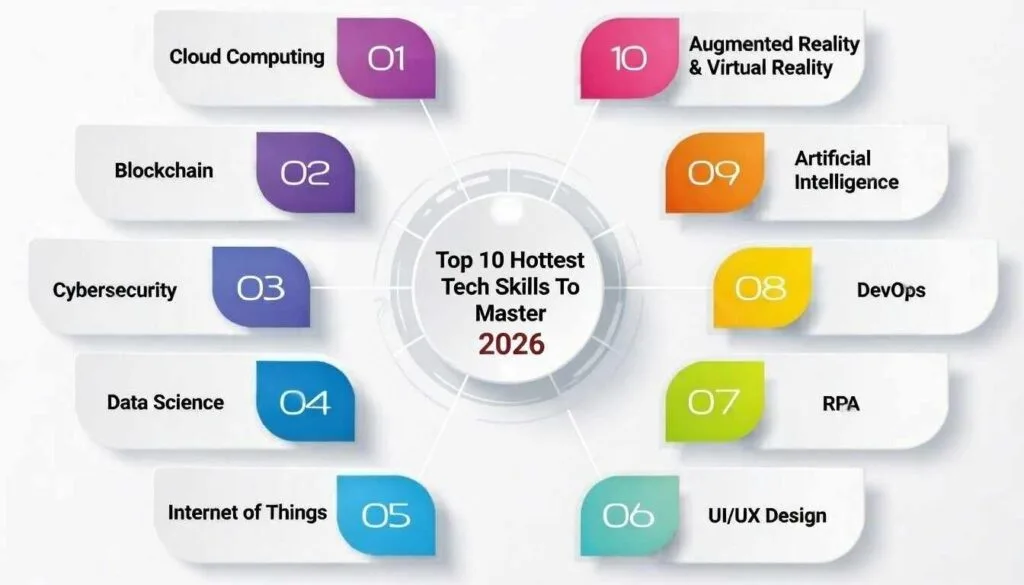
3. DevOps and Automation
DevOps bridges the gap between software development and IT operations. Familiarity with tools like Docker, Kubernetes, and CI/CD pipelines is highly valued.
The following timeline outlines the key stages of modern DevOps pipelines:
| Stage | Key Activities | Tools Used |
|---|---|---|
| Plan | Define goals, scope, and schedule | Jira, Trello |
| Code | Write, review and commit code | Git, GitHub, GitLab |
| Build | Compile code and package application | Jenkins, Maven |
| Test | Run unit and integration tests | Selenium, JUnit |
| Deploy | Release application to production | Docker, Kubernetes |
IV. Strategy for Acquiring Skills
Acquiring these skills requires a strategic approach. Academic learning is only the first step.
- Online Courses: Platforms like Coursera, Udemy, and edX offer structured learning paths and certifications.
- Personal Projects: Building your own applications, websites, or analyzing datasets is the best way to solidify your knowledge.
- Internships: Gain real-world experience and professional mentorship.
- Campus Resources: Join tech clubs, coding bootcamps, and hackathons.
In conclusion, staying curious and adaptable is key. The tech landscape will continue to evolve, and continuous learning is the path to long-term career success. For more resources on tech education, please refer to the resources section.